Transhumanism is the position that the human condition is not fixed, that its biological limits are legitimate targets of technological intervention, and that people should be free to use such interventions on themselves. It is a philosophical stance rather than a research programme, and its adherents disagree with each other about nearly everything except that premise. Its influence is easiest to see not in its own organisations, which have always been small, but in the assumptions that circulate in longevity biotech, neurotechnology and artificial-intelligence circles.
Precursors
The word is older than the movement and older than its twentieth-century users. Dante's Paradiso coins trasumanar for the passage beyond the human, and nineteenth-century English translators rendered it as "transhumanise". Modern usage does not descend from that line, and the coincidence has produced a good deal of retrospective genealogy.
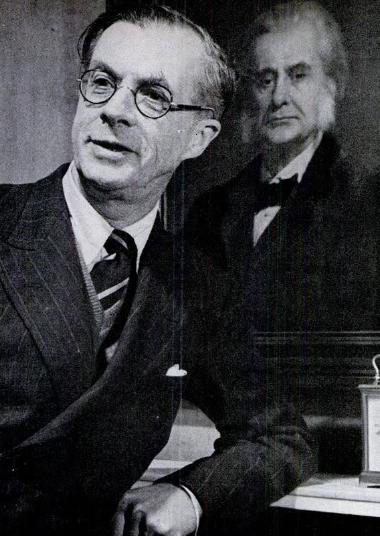
Julian Huxley used the word in a 1957 essay to name the idea of humanity consciously fulfilling its own potential, "man remaining man, but transcending himself".1 Huxley was a biologist and a eugenicist, and the movement's later critics have made much of that lineage; its defenders point out that Huxley's meaning was cultural and educational rather than genetic.
The substantive antecedents are older and mostly literary or speculative. J. B. S. Haldane's Daedalus, or Science and the Future (1923) predicted gestation outside the body and argued that biological invention would prove more disruptive than physical invention. J. D. Bernal's The World, the Flesh and the Devil (1929) sketched surgical replacement of the body, colonisation of space, and eventually the dissolution of individual minds into networked ones.2 Nikolai Fyodorov's Russian cosmism, half a century earlier, had made resurrection of the dead a religious duty of science. Robert Ettinger's The Prospect of Immortality (1964) founded Cryonics and, in Man into Superman (1972), extended the argument to bodily redesign.
-
1923DaedalusJ. B. S. Haldane argues that biological invention will outrun physical invention and predicts gestation outside the body.
-
1957Huxley's essayJulian Huxley publishes 'Transhumanism', giving the word its modern currency without founding a movement.
-
1964The Prospect of ImmortalityRobert Ettinger's book launches cryonics and supplies the movement with its first practical undertaking.
-
1989Are You a Transhuman?FM-2030 publishes a book treating the transhuman as a transitional being and offers a questionnaire for measuring how far along one is.
-
1988–1990The ExtropiansMax More and colleagues launch Extropy magazine and publish the Principles of Extropy, giving the movement its first organised form.
-
1998World Transhumanist AssociationNick Bostrom and David Pearce found the WTA and draft the Transhumanist Declaration, aiming for academic respectability rather than Californian libertarianism.
-
2004The dangerous ideaFrancis Fukuyama names transhumanism the world's most dangerous idea in Foreign Policy, marking its arrival as a target of mainstream political theory.
-
2008Humanity+The WTA rebrands as Humanity+; the movement's centre of gravity shifts toward well-funded technology firms and away from membership organisations.
Formation of the modern movement
FM-2030, born Fereidoun M. Esfandiary, taught at the New School in New York and used "transhuman" to mean a transitional human being whose values and habits already anticipate a post-biological future. His 1989 book Are You a Transhuman? is the first popular use of the term in something like its current sense.
The organised movement began in California around 1988, when Max More and Tom Bell founded Extropy magazine; the Extropy Institute followed in 1992 and closed in 2006. More's Principles of Extropy — perpetual progress, self-transformation, practical optimism, intelligent technology, open society, self-direction, rational thinking — supplied the movement's first explicit creed and its libertarian inflection.3 The extropians mailing list served through the 1990s as a common seedbed for cryonics, molecular nanotechnology, mind uploading and early artificial-intelligence risk arguments; the details are in Extropianism.
In 1998 Nick Bostrom and the philosopher David Pearce founded the World Transhumanist Association, deliberately positioned as a broader and more academically presentable body. Its Transhumanist Declaration, revised in 2009, is the nearest thing the movement has to a consensus text: it asserts the possibility of redesigning the human condition, insists on serious study of risks including existential ones, advocates wide access rather than access for the wealthy, and defends personal choice over enhancement. The WTA became Humanity+ in 2008. Natasha Vita-More contributed the movement's principal artistic strand, including the Primo Posthuman design study and a Transhumanist Arts Statement.
The movement has always been small in headcount and disproportionately present in adjacent institutions. Its participants founded or staffed cryonics providers, prize bodies such as the Methuselah Foundation, and research organisations including the Future of Humanity Institute at Oxford and the Machine Intelligence Research Institute in California. That pattern — few members, many institutions — accounts for both its reach and the difficulty of saying how many transhumanists there are. Membership figures for the organisations that kept them ran in the thousands rather than the hundreds of thousands, and no survey has established how many people hold the position without joining anything.
Core commitments
Four claims recur across otherwise incompatible transhumanist positions.
The human condition is contingent. Ageing, cognitive limits, mood set-points and the biological substrate of the mind are historical accidents rather than necessary features, and can in principle be engineered. This underwrites interest in the biology of ageing and Longevity escape velocity.
Enhancement is legitimate. The therapy–enhancement line does not mark a moral boundary; see Human enhancement. What matters is whether an intervention is safe, chosen, and good for the person.
Morphological freedom. Individuals have a strong claim to modify their own bodies and minds, and a correspondingly strong claim not to be modified. Morphological freedom traces the argument.
Substrate independence, at least as a live possibility. Many transhumanists hold that mind is a matter of organisation rather than material, which makes Whole brain emulation and Mind uploading coherent projects rather than category errors. This is a philosophical commitment, not an empirical finding; Substrate independence sets out the objections.
Bostrom's own summary, in his history of the movement, is that transhumanism is best understood as an extension of Enlightenment humanism — the same commitment to reason, science and individual liberty, applied to human biology rather than only to institutions.4
Internal disagreements
The movement's public image as a single ideology is misleading.
The oldest split is political. Extropian transhumanism is libertarian, sceptical of regulation, and confident that markets will diffuse enhancement. Democratic transhumanism, argued by James Hughes in Citizen Cyborg, holds that without redistribution and public provision, enhancement will entrench class advantage, and that the movement's libertarian wing has been its own worst enemy on this point.5 The dispute is the internal version of Access and inequality.
The second split concerns priorities. Longevity-focused transhumanists treat ageing as the central problem and view artificial intelligence as instrumental; see Aubrey de Grey. Singularitarians treat machine intelligence as the dominant variable, on the grounds that everything else follows from it; see Singularitarianism. The two camps have coexisted uneasily since the 1990s.
The third is about risk. One current, associated with Bostrom's later work and with Differential technological development, holds that some technologies should be deliberately slowed relative to others. The opposing current, most visible in Effective accelerationism, treats deceleration as itself the primary danger. Both claim the same intellectual ancestry.
A fourth concerns suffering. David Pearce's abolitionist position, set out in The Hedonistic Imperative (1995), holds that the elimination of involuntary suffering, not longevity or intelligence, is the movement's proper goal, and that gradients of well-being should replace the pain–pleasure axis entirely. It depends on control of hedonic set-points that no present technique approaches, and it divides the movement over whether the object of enhancement is capability or well-being.
Is transhumanism a religionCritics from both religious and secular positions have described transhumanism as a technological eschatology: resurrection by cryopreservation, transcendence by uploading, salvation by superintelligence. Transhumanists generally reply that their claims are empirical and falsifiable in a way that religious ones are not. The comparison is nonetheless doing real work, since the movement's central promises are unfalsifiable on any near timescale.
Criticism
Francis Fukuyama's 2004 essay naming transhumanism "the world's most dangerous idea" argued that liberal democracy rests on a shared human essence, and that a society whose members had different capacities by design could not sustain equal rights.6 Habermas made a parallel argument about the asymmetry between a designer and a designed person. Leon Kass offered the deepest version of the objection: that finitude is a condition of meaning rather than an obstacle to it, and that a project organised around escaping death misunderstands what makes a life good. These positions are developed in Bioconservatism.
A second line of criticism comes from science rather than philosophy. Most of the movement's flagship expectations have slipped badly. Molecular assemblers of the kind described in Molecular assembler were not built; cryopreservation has produced no revival of any complex organism; emulation remains many orders of magnitude from feasibility on both scanning and compute; and clinical genetic rejuvenation has not been demonstrated in humans. Transhumanist forecasting has a poor calibration record, which its more careful members acknowledge.
A third line, from science and technology studies and from critical theory, holds that transhumanism universalises a narrow set of preferences — individual autonomy, cognitive performance, control over the body — and treats them as human nature. Critics in disability studies argue that the movement's framing of impairment as a defect to be engineered away is precisely what the social model of disability rejects; see Disability rights and enhancement. The critical-posthumanist tradition, distinct from transhumanism despite the overlapping vocabulary, rejects the liberal individual subject that transhumanism takes for granted; Posthuman separates the two.
The most recent critique treats transhumanism as one component of a larger ideological bundle. Timnit Gebru and Émile Torres coined the acronym TESCREAL to link transhumanism with extropianism, singularitarianism, cosmism, rationalism, effective altruism and longtermism, arguing that the cluster carries eugenic assumptions and that its influence on artificial-intelligence development deserves scrutiny.7 Transhumanists dispute both the coherence of the bundle and the eugenics attribution; the debate is unresolved and has become unusually acrimonious.
Influence and current standing
As a membership movement, transhumanism is weaker than it was in 2005. Extropy Institute closed, Humanity+ has been intermittently active, and the Future of Humanity Institute, which housed much of the movement's most rigorous work, shut in 2024.
As a set of assumptions, it is stronger. Companies pursuing Epigenetic reprogramming, neural interfaces and machine intelligence are funded by people who read the movement's literature, and several of its founding ideas — that ageing is a treatable condition, that the brain is an information-processing system, that Artificial general intelligence is a near-term engineering target — are now mainstream positions in their respective industries whether or not anyone using them accepts the label.
A useful test of influence is vocabulary. Terms coined or popularised inside the movement — existential risk, superintelligence, escape velocity, morphological freedom, substrate independence — now appear in policy documents, corporate research agendas and legislative hearings, generally without attribution and often without the arguments that originally supported them. That is what makes the movement's current position hard to assess. The words travel; the reasoning that constrained them does not.
The open question is whether that diffusion counts as success. A movement whose premises have been absorbed while its organisations dissolved has won the argument in one sense and lost the ability to shape what follows in another, at exactly the point where the technologies it anticipated are becoming decisions rather than predictions.
See also
- Extropianism
- Posthuman
- Human enhancement
- Bioconservatism
- Singularitarianism
- Morphological freedom
- Humanity+
- Future of humanity
References
Footnotes
-
bookHuxley, J. "Transhumanism." In New Bottles for New Wine. Chatto & Windus, 1957. ↩
-
bookBernal, J. D. The World, the Flesh and the Devil: An Enquiry into the Future of the Three Enemies of the Rational Soul. Kegan Paul, 1929. ↩
-
paperMore, M. "Transhumanism: Toward a Futurist Philosophy." Extropy, 1990.↩Published in the magazine More co-founded; a statement of the extropian position rather than an independent account of it.
-
paperBostrom, N. "A History of Transhumanist Thought." Journal of Evolution and Technology, 2005.↩A history written by a co-founder of the World Transhumanist Association, in a journal aligned with the movement.
-
bookHughes, J. Citizen Cyborg: Why Democratic Societies Must Respond to the Redesigned Human of the Future. Westview Press, 2004. ↩
-
paperFukuyama, F. "Transhumanism." In "The World's Most Dangerous Ideas," Foreign Policy, 2004. ↩
-
paperGebru, T. and Torres, É. P. "The TESCREAL bundle: Eugenics and the promise of utopia through artificial general intelligence." First Monday, 2024.↩Written by critics of the movement; it argues a thesis about an ideological cluster rather than surveying who holds which view.