Somatic gene therapy is the deliberate alteration of genetic material in a living person's body cells — as distinct from their eggs, sperm, or embryos — in order to treat or prevent disease. Because the modified cells lie outside the germ line, the change ends with the patient and is not inherited, which is the line that separates the practice legally and ethically from Human germline editing. As of 2026 more than twenty gene and gene-modified cell therapies hold marketing authorisation in the United States, nearly all of them for rare single-gene disorders or for blood cancers.
How it works
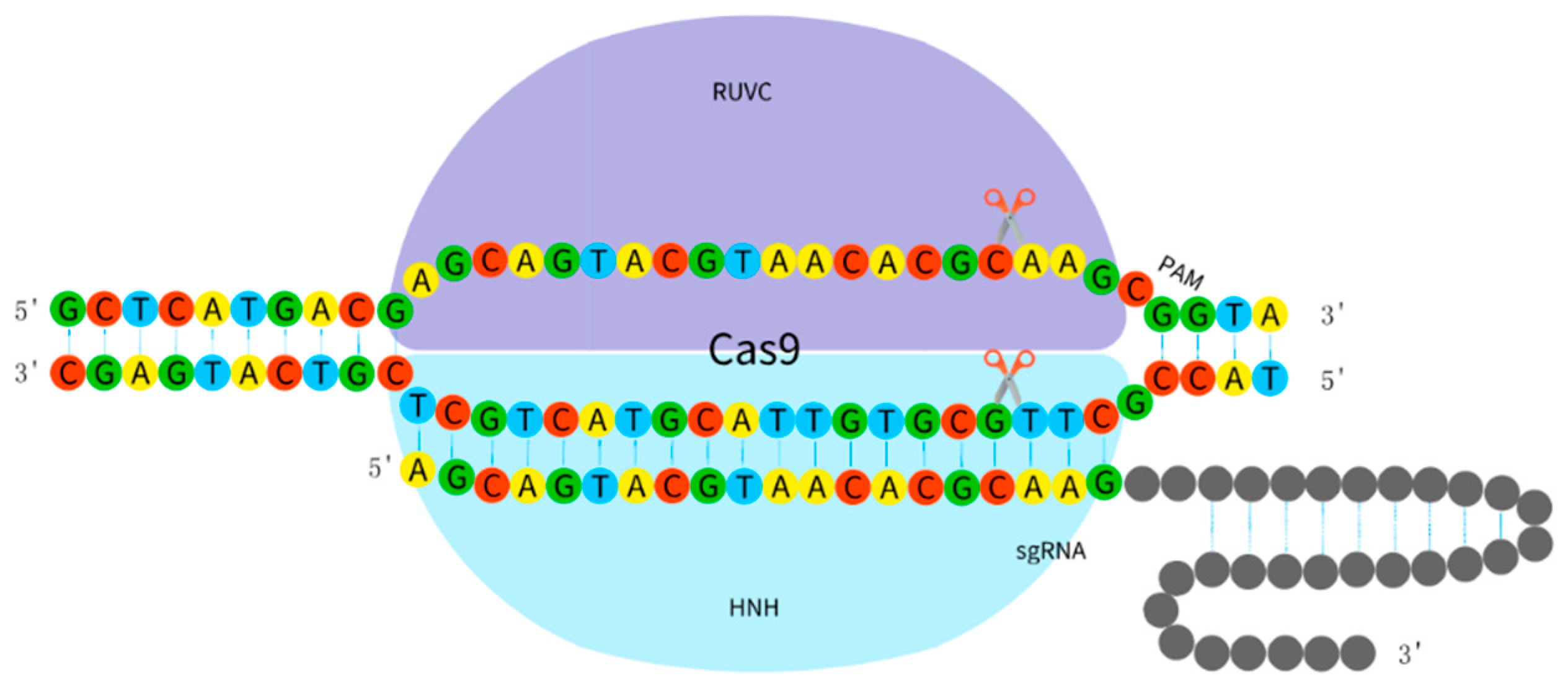
Three problems have to be solved: what to change, how to get the change into the right cells, and how to make it last. The first is the easiest. Thousands of diseases trace to a defined mutation, and for many the therapeutic logic is simply to supply a working copy of the gene, silence a toxic one, or repair the sequence in place with CRISPR–Cas9, Base editing, or Prime editing.
Delivery is where most programmes fail. Two broad strategies exist. Ex vivo therapy removes a patient's cells — usually CD34+ haematopoietic stem cells or T cells — modifies them in a laboratory, and returns them. This gives complete control over the editing step and allows the modified cells to be characterised before infusion, at the cost of an intensive clinical procedure. In vivo therapy injects the vector into the patient directly, most often adeno-associated virus into the bloodstream, muscle, eye, or spinal fluid, or increasingly Lipid nanoparticles carrying mRNA to the liver.
Durability depends on what is modified. Editing a stem cell produces a permanent change, because every daughter cell inherits it; the same logic underlies the use of Induced pluripotent stem cells as a starting material for engineered grafts. AAV genomes, by contrast, persist mostly as episomes that are diluted each time a cell divides — a serious limitation in growing children and in tissues that turn over. Genome editing sidesteps this by making the change in the DNA itself and letting the delivery vehicle disappear. Changing gene expression without touching the sequence at all, through Epigenome editing, is a third option now entering trials.
Development history
-
1990First authorised human gene transferW. French Anderson, R. Michael Blaese, and colleagues at the US National Institutes of Health infuse retrovirally modified T cells into a four-year-old with ADA deficiency.
-
1999Jesse Gelsinger diesAn 18-year-old with partial ornithine transcarbamylase deficiency dies of a systemic inflammatory response four days after receiving a high dose of adenoviral vector at the University of Pennsylvania. Trials are halted and the field contracts for a decade.
-
2000–2003Cure, then cancerParis and London trials restore immunity in boys with X-linked severe combined immunodeficiency, but several later develop T-cell leukaemia after the retroviral vector integrates near the LMO2 proto-oncogene.
-
2012Glybera approved in EuropeThe first gene therapy licensed in a Western market, for lipoprotein lipase deficiency. It is priced near one million euros, treats almost nobody, and is withdrawn in 2017.
-
2017LuxturnaVoretigene neparvovec, an AAV therapy for RPE65-associated retinal dystrophy, becomes the first in vivo gene therapy approved in the United States, at roughly $850,000 for both eyes.
-
2019ZolgensmaA single intravenous AAV9 dose for spinal muscular atrophy is approved at about $2.1 million, resetting expectations for what a one-time medicine can cost.
-
2023First CRISPR medicineThe UK authorises exagamglogene autotemcel for both sickle cell disease and beta thalassaemia in November; the US follows for sickle cell disease in December, alongside the lentiviral therapy Lyfgenia.
-
2025A therapy for one patientA bespoke base-editing treatment is designed, manufactured, and dosed for an infant with CPS1 deficiency in roughly six months, the first personalised in vivo editing therapy.
The Gelsinger death is the field's defining trauma. Investigations found not only that the adenoviral dose provoked an overwhelming innate immune reaction, but that adverse events in earlier patients had been under-reported and that the consent process had understated the risk.1 Funding and enthusiasm collapsed. Recovery came from unglamorous engineering: self-inactivating lentiviral vectors that no longer carried strong enhancers into the genome, AAV serotypes with better tissue targeting, and much more conservative dosing. The X-SCID trials of the early 2000s taught the complementary lesson, curing children of a lethal immunodeficiency and then giving several of them leukaemia through insertional activation of an oncogene.2
Why a 1999 death still shapes practiceDose escalation in small cohorts, long-term follow-up requirements measured in years, and intense scrutiny of vector immunogenicity are all direct inheritances from a single fatality in a phase 1 trial of a non-lethal condition. No comparable event has yet reshaped the norms around Dual-use research of concern in genome engineering.
What is approved
The licensed products cluster in three groups. Ex vivo haematopoietic stem cell therapies treat inherited blood and metabolic disease: Casgevy and Lyfgenia for sickle cell disease, Zynteglo for beta thalassaemia, Skysona for cerebral adrenoleukodystrophy, and Lenmeldy for metachromatic leukodystrophy. Engineered T-cell products — the CAR-T therapies beginning with Kymriah and Yescarta in 2017 — are gene therapies by mechanism, even though they are usually filed under cancer immunotherapy. In vivo AAV products cover the eye, the motor neuron, the liver, and skeletal muscle: Luxturna, Zolgensma, Hemgenix and Beqvez for haemophilia B, Roctavian for haemophilia A, and Elevidys for Duchenne muscular dystrophy.
A fourth category does not fit the one-shot model at all. Vyjuvek, a topical herpes-simplex-based vector for dystrophic epidermolysis bullosa, is applied repeatedly to wounds. Redosability changes the economics and the risk profile completely, and much of the current engineering effort in delivery aims at vehicles that can be given more than once.
Limitations
Immunity is the recurring obstacle. Many adults carry neutralising antibodies against common AAV serotypes and are excluded from treatment outright; those who are treated generate antibodies that make a second dose ineffective. Capsid-specific T cells can destroy transduced liver cells weeks after infusion, which is why transient steroid cover is standard.
Efficacy has often faded. Factor VIII expression after Roctavian declines substantially over the years following treatment, and the durability question now attaches to every in vivo liver programme. In children, dilution of episomal vector as the organ grows means a therapy that works at age one may not still be working at fifteen — a problem with no clean solution short of editing the stem cell compartment.
Safety failures continue. High systemic AAV doses have caused fatal liver failure, complement activation, and thrombotic microangiopathy; deaths in a trial for X-linked myotubular myopathy and, in 2025, among recipients of Elevidys prompted regulators to revisit dose ceilings for systemic administration. Insertional mutagenesis remains a live concern for integrating vectors, and off-target and on-target structural edits are monitored in every editing programme. The bar is high but not the same one applied to heritable modification, where an error propagates to descendants who cannot consent.
Cost and access
List prices run from roughly $400,000 to $4.25 million per patient. The arithmetic that produces them is straightforward: development costs comparable to an ordinary drug, spread across a few hundred or few thousand eligible patients, with no repeat revenue. Health systems built to pay for chronic medication monthly are poorly designed to pay for a cure once, and outcome-based instalment contracts have spread unevenly. Insurers' interest in who is likely to need such a payment also keeps Genetic discrimination on the policy agenda.
The commercial results have been harsh. Glybera was withdrawn; bluebird bio pulled Zynteglo out of Europe in 2021 after failing to agree reimbursement, and the company was later taken private at a fraction of its peak valuation; Pfizer discontinued Beqvez for lack of demand. Several therapies that work are sold nowhere, because no viable business can be built around them. That failure mode — an effective medicine withdrawn for commercial reasons — is close to unique to this class and sits at the centre of arguments about Access and inequality.
Where the patients areThe largest single-gene disease burdens, sickle cell disease foremost, fall overwhelmingly on countries without apheresis units, transplant wards, or the budget for a seven-figure infusion. Approval in Boston and London does not translate into treatment in Kano or Kinshasa.
Outlook
The technical direction is clear: move from ex vivo to in vivo, from viral to non-viral delivery, and from gene addition to precise correction. In vivo editing of blood stem cells, which would remove the need for chemotherapy conditioning altogether, is the single change that would do most to widen access; it has been shown in animals and is not yet a treatment. Personalised therapy for an ultra-rare mutation, demonstrated once in 2025, poses a regulatory question nobody has answered — how to license a medicine that will only ever have one recipient, and who pays for it.3 Whether the Precautionary principle as applied to gene transfer has been calibrated correctly is itself contested; the same caution that followed 1999 also kept effective therapies out of reach for years. What is not contested is that a field able to cure inherited blindness but unable to sell the cure has a distribution failure rather than a discovery failure, and no advance in capsid engineering fixes that.
See also
- Human germline editing
- Casgevy
- AAV vectors
- Lipid nanoparticles
- Gene therapy for aging
- Governance of human genome editing
- Access and inequality
- Off-target effects in genome editing
References
Footnotes
-
paperRaper, S.E. et al. "Fatal systemic inflammatory response syndrome in an ornithine transcarbamylase deficient patient following adenoviral gene transfer." Molecular Genetics and Metabolism, 2003.↩Written by the University of Pennsylvania investigators; the failures in consent and adverse-event reporting were established by the separate FDA and NIH inquiries.
-
paperHacein-Bey-Abina, S. et al. "LMO2-associated clonal T cell proliferation in two patients after gene therapy for SCID-X1." Science, 2003.↩Reports the first two leukaemia cases in the Paris trial; further cases in this and other trials of the same vector design followed.
-
paperMusunuru, K. et al. "Patient-Specific In Vivo Gene Editing to Treat a Rare Genetic Disease." New England Journal of Medicine, 2025.↩A single infant treated with a bespoke base editor. One patient establishes feasibility and cannot establish efficacy, durability, or safety.