Loading
Old version — revision 1
This is a fixed snapshot of Synthetic genomes, saved by Import as part of the initial corpus import. It is not edited and it is not updated; the article may have changed since.
Edit summary: Initial import of content/synthetic-genomes.md — the filesystem corpus, unchanged. Not an edit.
Synthetic genomes
Genomes designed on a computer and assembled from chemically synthesized DNA, then installed in a cell to see whether the design lives.
TechnologyExperimental2040sTRL 4revision 1
13.3 kB1,344 wordsGeneticsfrontmatter date 2026-07-27
Synthetic genomes are chromosomes designed as text and then built as molecules: an organism's genetic instructions written in a design file, assembled from short synthetic DNA fragments, and installed in a cell to see whether it functions. The point is not to copy nature but to test it. A designed genome states exactly which genes an experimenter believes are necessary and which changes are tolerable, and the cell either grows or it does not. That makes genome writing a comprehension test as much as an engineering achievement — the claim of the field's founders being that what cannot be built is not understood.
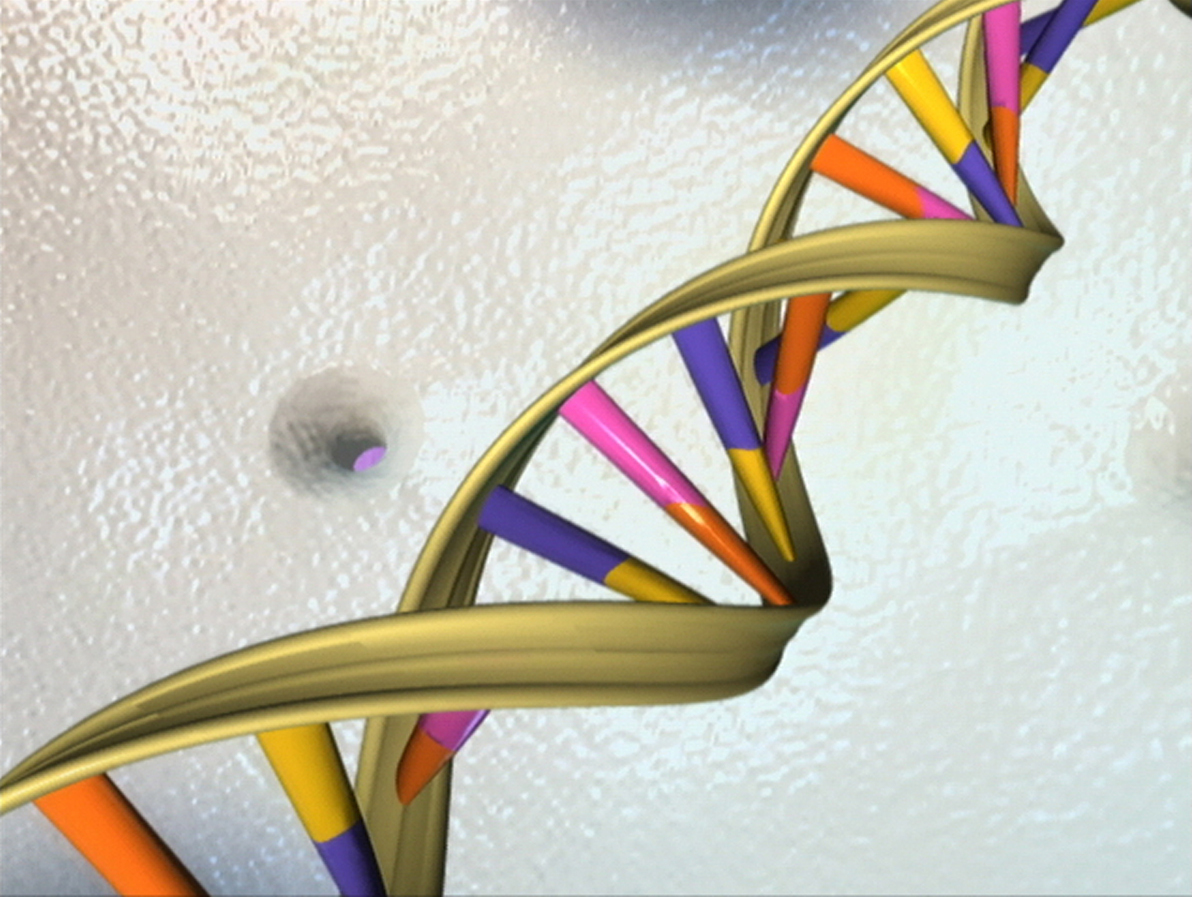
How genomes are built
Chemical DNA synthesis produces reliable strands only up to a few hundred bases, so every genome-scale project is an exercise in hierarchical assembly. Short oligonucleotides are joined into fragments of a few kilobases, those into chunks of tens of kilobases, and chunks into megabase assemblies, usually by exploiting yeast's efficient homologous recombination to stitch overlapping pieces together inside a living cell. Errors accumulate at every stage and must be sequenced out.
The final step is the hard one. A completed synthetic chromosome must displace the native one. In bacteria this has been done by transplanting a whole genome into a recipient cell emptied of its own, the approach that produced the first cell running on a synthesized chromosome in 2010;1 in yeast, by replacing native chromosome segments piece by piece with synthetic equivalents, selecting at each round, so that the cell is converted gradually rather than rebooted. There is no general method for either operation in animal cells, which is the main reason mammalian genome writing remains at the stage of individual chromosome fragments.
Terminology"Synthetic genome" describes provenance, not novelty. JCVI-syn1.0 was a near-copy of a natural sequence assembled from synthesized DNA; a heavily redesigned genome that is partly natural in origin may be far more synthetic in the ordinary sense of the word.
Development history
The field has advanced by roughly one order of magnitude of genome size per decade, and each step has been limited by assembly and installation rather than by the chemistry of making DNA. The sequence below is also a sequence of increasing ambition: from copying a viral genome, to copying a bacterial one, to redesigning a eukaryotic one.
-
2002Poliovirus from published sequenceEckard Wimmer's group assembles an infectious poliovirus genome from mail-order oligonucleotides, the first demonstration that a viral genome can be built from sequence data alone.
-
2008A bacterial genome synthesizedThe J. Craig Venter Institute assembles the Mycoplasma genitalium genome, though it is not installed in a cell.
-
2010JCVI-syn1.0A synthesized Mycoplasma mycoides genome is transplanted into a recipient cell, which then replicates under the control of the built chromosome.
-
2014First synthetic eukaryotic chromosomeThe Sc2.0 consortium reports a redesigned, functional yeast chromosome III, stripped of transposons and introns.
-
2016Minimal cellJCVI-syn3.0 is reduced to 473 genes, of which a substantial fraction have no known function.
-
2019–2021Recoded Escherichia coliA 4-megabase E. coli genome is rebuilt with three codons removed, and the corresponding transfer RNAs and release factor deleted.
-
2023Sc2.0 chromosomes completedAll sixteen synthetic yeast chromosomes are reported, along with a designed neochromosome carrying relocated transfer RNA genes.
-
2025Human chromosome project announcedA UK-funded programme is announced to develop the tools for building a synthetic human chromosome in cultured cells, with an attached social science strand.
Minimal cells
The most informative result to come out of genome writing is negative. In building a stripped-down Mycoplasma, the Venter Institute found that a genome could be cut to 473 genes and still sustain a free-living cell — but that roughly a third of those genes had no assigned function.2 They were necessary and unexplained. A decade of sequencing and annotation had not identified them, and only the requirement to build a working cell exposed the gap.
Later versions restored a small number of genes to fix abnormal cell division, producing a strain that grows and divides more normally and that now serves as a chassis for studying how a minimal set of parts organises a cell. The lesson generalises: gene-by-gene knockout studies systematically miss redundancy, and only a whole-genome design forces the question of sufficiency.
Sc2.0 and the rewritable genome
The synthetic yeast project set out to redesign rather than copy, beginning with a rebuilt chromosome III reported in 2014.3 Its chromosomes have transposable elements and introns removed, all instances of one stop codon swapped for another to free a codon for later reassignment, and transfer RNA genes relocated to a dedicated artificial chromosome. The most distinctive design choice was to build in a mechanism for scrambling: recombination sites placed after every non-essential gene allow an inducible enzyme to delete, invert and rearrange the genome at random, generating enormous structural diversity from a single strain.
This makes the synthetic yeast genome an evolutionary instrument rather than a fixed product. It can be shuffled deliberately to find configurations that improve a trait, an approach not available with the targeted edits of CRISPR–Cas9 or the sequence-level rewriting of Prime editing.
Recoding and virus resistance
Rebuilding a genome allows changes no editing tool could make efficiently, because they must be applied at thousands of positions at once. Removing every instance of a codon from a bacterial genome, then deleting the machinery that reads it, frees that codon for reassignment to a non-standard amino acid — and incidentally renders the cell unreadable to viruses, whose genomes still use the original code. These consequences are treated in detail in Genetic code expansion and recoding.
Human genome writing
Genome Project–write, proposed in 2016 by a group including Jef Boeke and George Church as a successor to the Human Genome Project, aimed to reduce the cost of designing and building large genomes by orders of magnitude.4 Its announcement was clumsy: an invitation-only meeting closed to press prompted public criticism from synthetic biologists and bioethicists that a project of this kind should not begin behind a closed door, and the organisers subsequently reframed the goal around cells rather than organisms. The flagship proposal became an "ultra-safe" human cell line, recoded for resistance to viral infection, which would be valuable for biomanufacturing and would sidestep the question of synthetic people entirely. The same reasoning drives the multiply edited donor animals used in Xenotransplantation, where inactivating endogenous retroviruses is a prerequisite rather than a bonus.
In 2025 a British funder committed to a programme aimed at developing the tools to build a synthetic human chromosome, with an explicit remit confined to cells in culture and a parallel social science strand. As of 2026 no synthetic human chromosome exists. The gap is quantitative and large: a human genome is close to a thousand times the size of the largest genome yet assembled from synthetic DNA, mammalian cells have no equivalent of yeast's chromosome-replacement machinery, and chromatin structure, imprinting and long-range regulation are design variables nobody knows how to specify.
What the project would meanSupporters argue that synthetic human chromosomes would give a clean testbed for regulatory genomics and virus-resistant manufacturing cells, and that the work stops at cell culture. Critics respond that the tools do not stop where the stated goal does, and that a capability to write human chromosomes eventually meets the questions raised by Human germline editing and by Stem-cell-based embryo models whether or not anyone intends it to. Neither side disputes that the capability is decades away.
Risks and governance
Genome writing is the clearest current case of Dual-use research of concern, and the reason engineered pathogens dominate the biological section of the Existential risk literature. The 2018 reconstruction of horsepox virus from commercially ordered DNA, undertaken partly to demonstrate feasibility, showed that a pathogen of a size that matters could be built for a sum well within a small laboratory's budget.5 The principal control is screening at the point of synthesis: providers check orders against sequences of concern and check the identity of customers. The International Gene Synthesis Consortium operates such screening voluntarily, and United States federal policy has moved toward steering research funding to providers that screen, though the requirements have been revised more than once and the arrangement is not statutory. Coverage is incomplete, benchtop synthesis devices complicate enforcement, and sequence variants generated by protein design models that evade string-matching screens are an active concern.
The biosafety questions differ from those raised by self-spreading constructs such as gene drives or by the chirally inverted organisms discussed in Mirror life. A synthetic Mycoplasma is fastidious and fragile. The risk is in the capability and in what the falling cost of synthesis makes available to whom, which is why the governance debate here borrows less from Governance of human genome editing than from arms control and from the norms established at the Asilomar Conference on Recombinant DNA.
Outlook
The near-term work is unglamorous: cheaper and more accurate synthesis, enzymatic rather than phosphoramidite chemistry, better assembly in mammalian cells, and design rules that predict whether a rewritten sequence will function before it is built. The deeper question is what genome writing is for. In bacteria and yeast the answers are concrete — chassis organisms, virus resistance, non-standard chemistry. For human cells the strongest case is a virus-resistant manufacturing line, which is a narrow industrial goal supporting a very broad capability, and the field has not settled whether that asymmetry is acceptable.
See also
- Genetic code expansion and recoding
- CRISPR–Cas9
- Dual-use research of concern
- Mirror life
- Gene drives
- Prime editing
- Human germline editing
- George Church
References
Footnotes
-
paperGibson, D. G. et al. "Creation of a bacterial cell controlled by a chemically synthesized genome." Science, 2010. ↩
-
paperHutchison, C. A. III et al. "Design and synthesis of a minimal bacterial genome." Science, 2016. ↩
-
paperAnnaluru, N. et al. "Total synthesis of a functional designer eukaryotic chromosome." Science, 2014. ↩
-
paperBoeke, J. D. et al. "The Genome Project–Write." Science, 2016.↩A short proposal piece rather than an experimental report; it announces a programme and states an aim, and contains no results.
-
paperNoyce, R. S., Lederman, S., Evans, D. H. "Construction of an infectious horsepox virus vaccine from chemically synthesized DNA fragments." PLoS ONE, 2018.↩The reconstruction was done for a company developing a smallpox vaccine, and the cost claim widely drawn from it is the authors' own estimate.