Loading
Old version — revision 1
This is a fixed snapshot of Cynthia Kenyon, saved by Import as part of the initial corpus import. It is not edited and it is not updated; the article may have changed since.
Edit summary: Initial import of content/cynthia-kenyon.md — the filesystem corpus, unchanged. Not an edit.
Cynthia Kenyon
American molecular geneticist whose 1993 finding that a single daf-2 mutation doubles the lifespan of C. elegans made aging a tractable genetic problem.
Personrevision 1
16.2 kB1,628 wordsPeoplefrontmatter date 2026-07-27
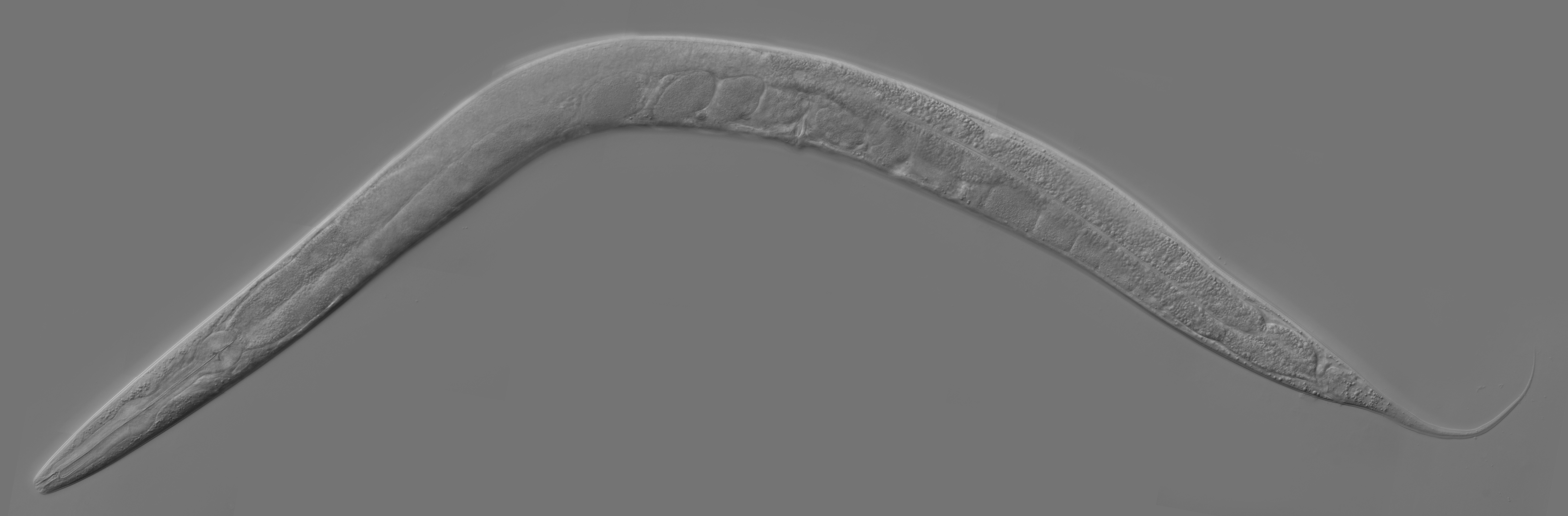
Cynthia Kenyon is an American molecular geneticist whose laboratory showed in 1993 that a mutation in a single gene, daf-2, roughly doubles the lifespan of the nematode Caenorhabditis elegans, and that the extension depends entirely on a second gene, daf-16. The long-lived animals stayed active rather than merely surviving longer, a detail that shaped how the result was received. Before that experiment, aging was widely treated as dispersed damage with no control point and no serious genetics; afterwards it was a pathway. Since 2014 she has been vice president of aging research at Calico Life Sciences.
Career
Kenyon studied biochemistry at the University of Georgia and took a doctorate at the Massachusetts Institute of Technology with Graham Walker, where she showed that DNA-damaging agents switch on a specific set of genes in Escherichia coli, several of them involved in DNA repair — early evidence that a cell answers damage with a coordinated transcriptional response. She then joined Sydney Brenner's group at the MRC Laboratory of Molecular Biology in Cambridge, where C. elegans had been built into a model organism and its cell lineage was being traced cell by cell.
She joined the University of California, San Francisco in the mid-1980s and worked first on how Hox genes pattern the worm's body. The turn to aging was, by her own account, a deliberate move into a question the field considered unproductive. At UCSF she was a professor in the department of biochemistry and biophysics and directed the Hillblom Center for the Biology of Aging. She is a member of the National Academy of Sciences.
Why the result was unexpected
Evolutionary theory gave no reason to expect genes dedicated to aging: selection weakens once reproduction ends, so a programme that destroys an old animal has nothing to maintain it. The working picture was of damage accumulating across many systems at once — oxidation, protein cross-linking, somatic mutation — with no lever anywhere. Caloric restriction was the one intervention reliably known to extend rodent lifespan, and even that had no mechanism attached. A molecular biologist who announced plans to find aging genes was assumed to be looking for something that did not exist.
There had been signals. Michael Klass isolated long-lived worm strains in the early 1980s, and Thomas Johnson and David Friedman later characterized one of them, age-1, reporting a substantially longer mean lifespan together with reduced fertility.1 The work was known and did not change the field's mind: a single mutant of unknown mechanism is easy to dismiss as sickly or slow.
The 1993 experiment
daf-2 and daf-16 were already named for their role in dauer formation, an alternative larval stage that worms enter under crowding or starvation and can persist in for months. Kenyon's group used temperature-sensitive partial loss-of-function alleles, which let animals develop normally and then, as adults, live roughly twice as long as wild type.2 The mutants moved and fed like younger worms well past the age at which the controls had died. Mutating daf-16 abolished the effect completely: without it, daf-2 mutants lived an ordinary span.
That genetic dependency mattered more than the doubling. It showed the extension was not a by-product of being ill or torpid but the output of a regulatory relationship — daf-2 signalling normally holds daf-16 off, and lifting that suppression switches on something that keeps an animal alive longer. Aging, in at least one animal, had a control point.
What changed in 1993One mutation, in an otherwise normal animal, in a named pathway, with a clean epistatic dependency on a second gene. That combination made the result impossible to file under "sick worms live longer", and laboratories with no interest in gerontology began running lifespan assays.
Building out the pathway
In 1997 Gary Ruvkun's laboratory cloned daf-2 and found that it encodes a receptor of the insulin/IGF-1 family.3 The same year Kenyon's group and Ruvkun's independently identified daf-16 as a forkhead transcription factor, the worm counterpart of the mammalian FOXO proteins.4 What the 1993 experiment had caught was a nutrient-sensing system conserved across animals rather than a worm peculiarity, which is why the finding travelled.
Her laboratory then established that worm lifespan is regulated between tissues rather than cell by cell. Removing germline precursor cells extends lifespan, and signals from the reproductive system act on DAF-16 elsewhere in the body.5 Combining germline removal with a daf-2 mutation produced animals living roughly six times the normal span and still moving.6 Sensory neurons contribute too: worms whose sensory perception is impaired outlive worms that sense their surroundings normally. Downstream, DAF-16 turned out to control hundreds of genes — chaperones and other Proteostasis collapse machinery, stress-response and antimicrobial genes, metabolic enzymes — so the longevity output is itself polygenic, and Autophagy genes are required for it.
One experiment matters particularly for translation. Reducing daf-2 activity only in adulthood, after development is complete, is enough to extend lifespan.7 Worm aging is not locked in by developmental history, which is the premise every adult-onset intervention rests on.
-
1983–1988First long-lived worm mutantsMichael Klass isolates strains that outlive wild type; Friedman and Johnson later characterize age-1. The field takes little notice.
-
1993daf-2 doubles lifespanKenyon, Chang, Gensch, Rudner and Tabtiang report that a daf-2 mutation roughly doubles C. elegans lifespan and that the effect requires daf-16.
-
1997The genes are cloneddaf-2 proves to encode an insulin/IGF-1-like receptor and daf-16 a forkhead (FOXO) transcription factor, placing worm longevity in a conserved pathway.
-
1999Lifespan is signalled between tissuesRemoving germline precursor cells extends lifespan, showing that the reproductive system regulates aging in the rest of the animal.
-
2002Adult-onset reduction sufficesLowering daf-2 activity only after development still extends lifespan, separating aging from developmental programming.
-
2003IGF-1 receptor mice live longerMice heterozygous for the IGF-1 receptor show a modest lifespan increase, concentrated in females — the mammalian echo of the worm result.
-
2008FOXO3 and human survivalVariants near FOXO3 are associated with exceptional longevity in a Japanese-American cohort, and the association replicates in other populations.
-
2014Kenyon joins CalicoShe moves from UCSF to the aging-research company Google founded the year before, as vice president of aging research.
From worms to mammals
Reduced insulin/IGF-1 signalling extends lifespan in fruit flies and, more modestly, in mice: animals heterozygous for the IGF-1 receptor live longer, with the effect concentrated in females,8 and dwarf mice with defective growth hormone signalling are among the longest-lived laboratory strains. The direction is consistent across species and the magnitude shrinks as the animal gets more complicated. A worm doubles. A mouse gains a fraction of that, often in one sex only, and the long-lived growth hormone mutants carry small body size and altered glucose handling with them.
In humans the pathway appears in genetics rather than in trials. Variants near FOXO3 are among the few associations with exceptional survival that have replicated across populations.9 People with inherited growth hormone receptor deficiency, who have very low circulating IGF-1, have been reported to be nearly free of diabetes and cancer without living longer than their relatives.10 Studies of centenarian families, including the cohorts assembled by Nir Barzilai, keep implicating growth and insulin signalling without yielding an intervention.
Reception and criticism
The immediate objection in 1993 was that the mutants might simply have diverted into a dauer-like torpor and be living longer by living less. Kenyon's emphasis on their activity, the cloning of the genes, and the later demonstration that adult-onset reduction works answered most of that. Within a decade the subject had funding, dedicated journals and dedicated institutes; the organizing claim that treating aging itself would postpone several diseases at once was later formalized as the Geroscience hypothesis.
Two criticisms have not gone away. The first is that the worm's adult soma is post-mitotic with a fixed cell number, so much of what kills mammals has no counterpart in it: no somatic Stem cell exhaustion, no dividing cells to accumulate telomere attrition, no analogue of the mammalian Cellular senescence that Senolytics are built to clear. Several of the Hallmarks of aging are not testable in a nematode, and a pathway that sets the rate of decline there need not bound Maximum human lifespan. The second is that daf-2 mutants pay for their longevity in ways the headline number hides: reduced brood size, and a physiology partly resembling the stress-resistant dauer state the genes were named for.
A programme for aging, or a repurposed survival programmeKenyon has argued that animals carry a regulatory system that sets the rate of aging and that it can be turned down. Critics read the same experiments as a nutrient-sensing switch into a stress-resistant, low-growth state that happens to postpone death — conserved and real, but not the same claim. The distinction decides whether "the aging pathway" is a drug target or a metaphor.
Legacy
The 1993 paper is much of the reason biogerontology can be funded as molecular biology. It made C. elegans the workhorse of the field, supporting compound screens, standardized lifespan assays and multi-laboratory replication efforts. Arguments that aging is a treatable condition rather than a fixed fact of biology, pressed by Aubrey de Grey and later by David Sinclair, rest on an experimental anchor that did not exist before 1993, and the institutional build-out that followed runs from the Buck Institute for Research on Aging through Calico to Altos Labs. The The longevity dividend case for treating aging as a public health target rests on the premise her worms supplied: that the rate of aging is adjustable at all. Kenyon has framed the goal as Healthspan rather than years alone, on the grounds that her mutants did not merely persist, they stayed young longer.
What the pathway has not produced is a human intervention. Nothing acting on insulin/IGF-1 signalling has been shown to slow human aging; Rapamycin and Metformin and the TAME trial work on adjacent nutrient-sensing biology and remain unproven for that purpose in people; no surrogate endpoint has been qualified by a regulator, so no trial design would settle the question quickly; and the genetic route, whether by Gene therapy for aging or otherwise, has no human-validated target. The worm result changed what questions the field may ask, not what can be prescribed.
What the worm result does not licenseKenyon has described cutting sugar and starch from her own diet after work in her laboratory linked glucose to shortened worm lifespan through DAF-16. That inference has not been tested in people. Three decades on, the pathway has yielded human genetics and no human therapy, and the best-supported way to compress late-life decline in humans is still exercise.
The open question is the one the 1993 result created. Nematode lifespan can be dialled by a single receptor; mammalian lifespan responds to the same receptor by tens of percent, with costs in growth, fertility and metabolism attached. Whether that ratio reflects a translation problem that better molecules will solve, or a real difference between an animal with a fixed soma and one with dividing tissue and cancer, is unresolved — and it decides whether the pathway is a route to human slowed aging or a beautiful piece of worm biology.
See also
- Calico Life Sciences
- Geroscience hypothesis
- Hallmarks of aging
- Caloric restriction
- Nir Barzilai
- David Sinclair
- Maximum human lifespan
- Healthspan
References
Footnotes
-
paperFriedman, D. B. and Johnson, T. E. "A mutation in the age-1 gene in Caenorhabditis elegans lengthens life and reduces hermaphrodite fertility." Genetics, 1988.↩The first long-lived worm mutant to be mapped; the reduced fertility is why it was initially read as a sickness rather than as slowed aging.
-
paperKenyon, C., Chang, J., Gensch, E., Rudner, A. and Tabtiang, R. "A C. elegans mutant that lives twice as long as wild type." Nature, 1993. ↩
-
paperKimura, K. D., Tissenbaum, H. A., Liu, Y. and Ruvkun, G. "daf-2, an insulin receptor-like gene that regulates longevity and diapause in Caenorhabditis elegans." Science, 1997. ↩
-
paperLin, K., Dorman, J. B., Rodan, A. and Kenyon, C. "daf-16: An HNF-3/forkhead family member that can function to double the life-span of Caenorhabditis elegans." Science, 1997.↩Ruvkun's laboratory reported the same identification independently in Nature the same year.
-
paperHsin, H. and Kenyon, C. "Signals from the reproductive system regulate the lifespan of C. elegans." Nature, 1999. ↩
-
paperArantes-Oliveira, N., Berman, J. R. and Kenyon, C. "Healthy animals with extreme longevity." Science, 2003. ↩
-
paperDillin, A., Crawford, D. K. and Kenyon, C. "Timing requirements for insulin/IGF-1 signaling in C. elegans." Science, 2002. ↩
-
paperHolzenberger, M. et al. "IGF-1 receptor regulates lifespan and resistance to oxidative stress in mice." Nature, 2003.↩Heterozygous knockout mice; the effect was far smaller than in worms and clearest in females.
-
paperWillcox, B. J. et al. "FOXO3A genotype is strongly associated with human longevity." PNAS, 2008.↩An association in long-lived Japanese-American men, since replicated elsewhere; it links the pathway to human survival without showing that altering it would help.
-
paperGuevara-Aguirre, J. et al. "Growth hormone receptor deficiency is associated with a major reduction in pro-aging signaling, cancer, and diabetes in humans." Science Translational Medicine, 2011.↩A small Ecuadorian cohort; disease incidence fell but lifespan did not rise.